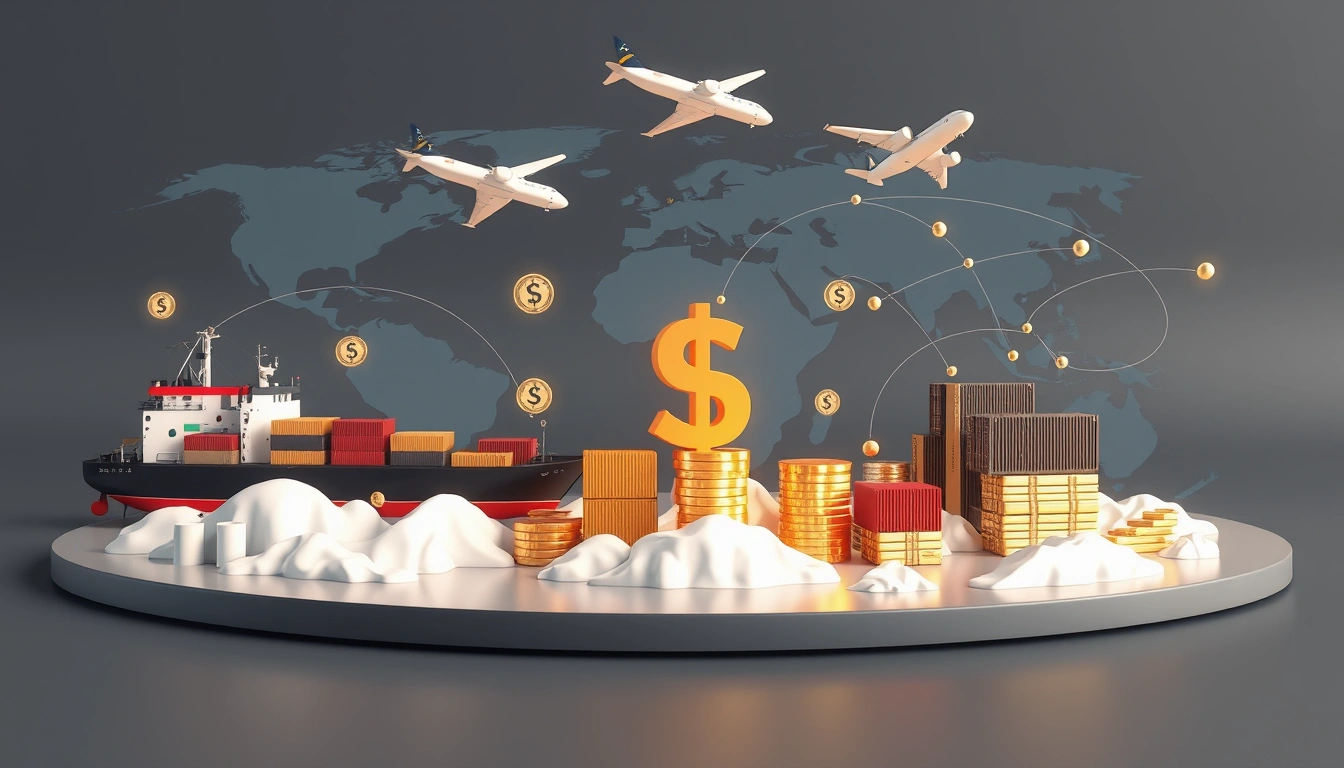
Global trade connects businesses across countries, cultures, and currencies. However, buying and selling goods internationally involves risks such as delayed payments, currency fluctuations, political uncertainty, and trust issues between unfamiliar trading partners. This is where trade finance plays a critical role.
Trade finance provides the financial tools and mechanisms that make international trade smoother, safer, and more efficient for importers and exporters.
What Is Trade Finance?
Trade finance refers to the financial instruments, products, and services used to facilitate international trade and commerce. It helps bridge the gap between exporters who want quick payment and importers who prefer to pay after receiving goods.
In simple terms, trade finance:
-
Reduces payment and delivery risks
-
Improves cash flow for businesses
-
Enables cross-border transactions with confidence
Banks and financial institutions act as intermediaries, ensuring that both buyers and sellers meet their contractual obligations.
Why Trade Finance Is Important
International trade involves multiple uncertainties. Trade finance helps businesses overcome these challenges by:
-
Providing payment assurance
-
Supporting working capital needs
-
Reducing risks associated with unfamiliar markets
-
Enabling access to global supply chains
Trade finance is considered one of the lowest-risk segments of global credit, as transactions are backed by goods, documents, and collateral.
Key Components of Trade Finance
Financial Instruments Used in Trade Finance
Trade finance relies on several specialized instruments designed to support global trade:
-
Letters of Credit (LCs)
-
Issued by an importer’s bank
-
Guarantees payment to the exporter upon submission of valid shipping documents
-
Minimizes non-payment risk
-
-
Bank Guarantees
-
Bank promises to cover losses if a party fails to meet contractual obligations

-
Common in large international contracts
-
-
Import and Pre-Export Financing
-
Short-term loans for purchasing raw materials or producing goods
-
Often secured by collateral or export orders
-
-
Factoring
-
Exporters sell invoices to a financier at a discount
-
Improves cash flow without waiting for buyer payment
-
-
Export Credits
-
Financial support provided by banks or government-backed agencies
-
Encourages domestic exporters to expand globally
-
Parties Involved in Trade Finance
Trade finance operates through a structured ecosystem of stakeholders:
-
Banks and Financial Institutions
-
Primary providers of trade finance products
-
Assess credit risk and manage documentation
-
-
Importers
-
Purchase goods from foreign suppliers
-
Use trade finance to defer payments safely
-
-
Exporters
-
Sell goods internationally
-
Use trade finance to secure timely payments

-
-
Export Credit Agencies (ECAs)
-
Government-backed institutions
-
Provide guarantees and insurance for exporters
-
-
Multilateral Development Banks
-
Support trade finance in developing economies
-
Reduce financing gaps where private banks hesitate
-
-
Insurers
-
Offer trade credit insurance
-
Protect against non-payment and political risks
-
-
Governments and Regulators
-
Create trade-friendly policies
-
Ensure compliance with international standards
-
How Trade Finance Works
A typical trade finance transaction follows a structured process:
Step-by-Step Trade Finance Process
-
Trade Agreement
-
Importer and exporter agree on price, quantity, delivery terms, and payment method
-
-
Issuance of Trade Instrument
-
Importer’s bank issues a letter of credit or guarantee
-
-
Shipment of Goods
-
Exporter ships goods as per agreed terms
-
-
Document Submission

-
Exporter submits shipping documents to the bank
-
-
Verification
-
Bank verifies documents against LC terms
-
-
Payment Release
-
Exporter receives payment upon document approval
-
-
Settlement
-
Importer repays the bank as per agreed terms
-
This structured flow ensures trust, transparency, and financial security.
How Trade Finance Reduces Risk
International trade exposes businesses to multiple risks. Trade finance addresses these effectively:
Key Risks and Mitigation
-
Non-Payment Risk
-
Letters of credit and guarantees ensure payment compliance
-
-
Currency Risk
-
Hedging tools and forward contracts protect against exchange rate volatility
-
-
Political and Country Risk
-
Export credit agencies and insurance cover geopolitical instability
-
-
Operational and Fraud Risk
-
Strict documentation and bank verification reduce fraud
-
-
Credit Risk
-
Banks assess importer creditworthiness before issuing guarantees
-
By transferring risk from exporters to banks, trade finance builds trust between trading partners.

Benefits of Trade Finance
1. Improved Cash Flow
-
Exporters receive payments faster
-
Importers gain flexible payment timelines
-
Reduces dependence on traditional business loans
SMEs benefit significantly as trade finance helps fund production and shipment without cash shortages.
2. Expansion into Global Markets
-
Businesses can confidently enter new countries
-
Reduced risk encourages larger orders
-
Trade finance supports over 80% of global trade volume
Digital trade finance platforms are making these tools more accessible to small businesses.
3. Stronger Business Relationships
-
Assured payments build trust
-
Reduces disputes between buyers and sellers
-
Enables long-term partnerships
Reliable payment mechanisms improve supplier and buyer confidence.
4. Lower Financial Risk
-
Transactions are backed by goods and documentation
-
Less exposure to defaults compared to unsecured lending
-
Predictable cash flows support better financial planning
Challenges and Considerations in Trade Finance
Despite its advantages, trade finance has limitations.
Regulatory and Compliance Challenges
Trade finance is heavily regulated to prevent illegal activities:
-
Anti-Money Laundering (AML) compliance
-
Know Your Customer (KYC) checks
-
Sanctions screening and monitoring

Banks must:
-
Verify customer identities
-
Monitor transactions continuously
-
Screen against global watchlists
These requirements increase operational complexity.
Cost-Related Challenges
-
Trade finance costs vary widely by region
-
Letters of credit may cost:
-
0.25%–0.50% in developed markets
-
2%–4% in emerging economies
-
Additional cost factors:
-
High compliance expenses for banks
-
Higher premiums for SMEs
-
Documentation and administrative overhead
In developing countries, these costs often limit access to trade finance for small businesses.
Role of Trade Finance in Economic Development
Trade finance plays a vital role in:
-
Supporting exporters in emerging markets
-
Reducing the global trade finance gap
-
Enabling inclusive international trade
Organizations like the World Trade Organization and multilateral banks actively promote wider access to trade finance to help developing economies integrate into global markets.
Conclusion
Trade finance is the backbone of international commerce, enabling businesses to trade across borders with confidence. By reducing payment risk, improving liquidity, and supporting working capital needs, trade finance makes global trade more accessible for companies of all sizes.
Although regulatory complexity and costs remain challenges, evolving digital solutions and policy support are expanding access to trade finance worldwide. For businesses aiming to grow beyond domestic markets, trade finance is not just a financial tool—it is a strategic necessity.