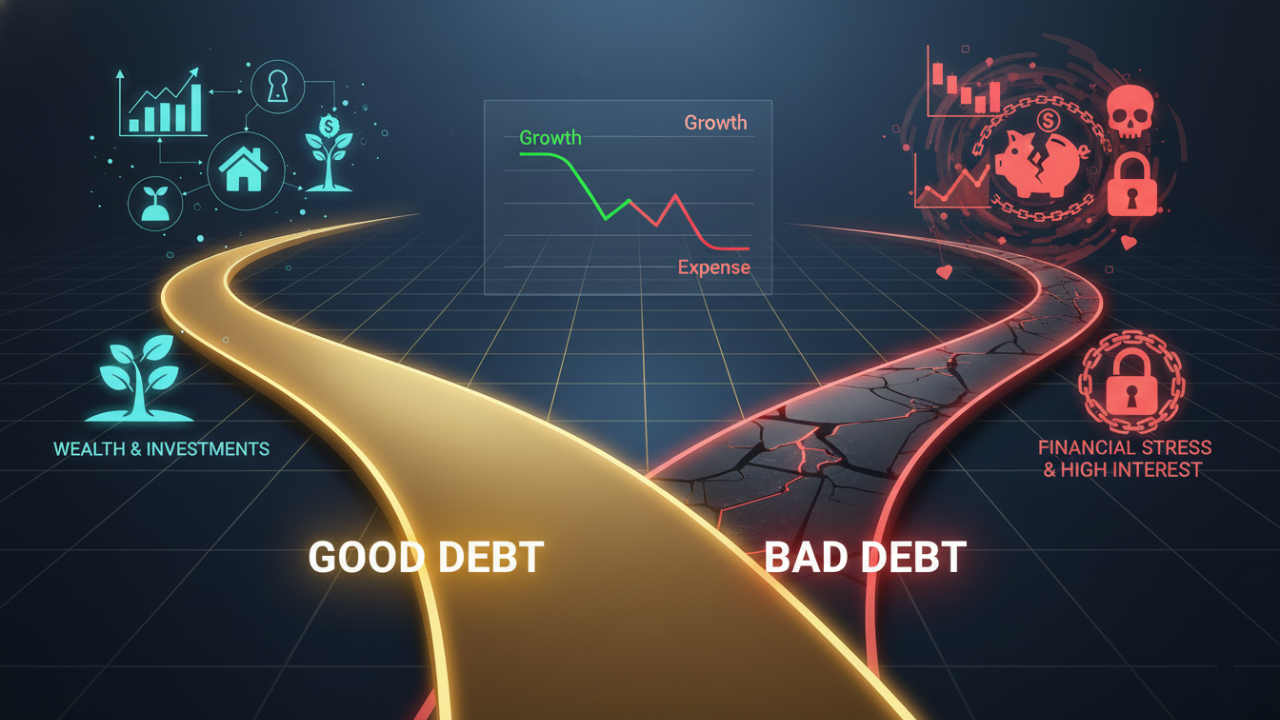
Managing money wisely is more than just earning and saving—it’s also about understanding debt. Not all debt is harmful, and knowing the difference between good debt vs bad debt can shape your financial future. By making informed choices, you can use debt as a tool to build wealth rather than a burden that drains your finances.
What Is Good Debt and Why It Can Be Beneficial
Good debt is an investment in your future. It refers to borrowed money that helps you build assets, generate income, or improve your financial standing over time. Examples include student loans, mortgages, and business loans. When used responsibly, good debt can increase your earning potential, build credit history, and create opportunities that might not be possible with only your savings.
One of the main characteristics of good debt is that it usually has low-interest rates and long-term repayment plans. For instance, a mortgage lets you purchase a home while spreading payments over decades. Similarly, a student loan can open doors to better-paying jobs or a specialized career.
Good debt also encourages financial discipline because you are investing in something that has the potential to grow in value or generate returns. For example, taking a business loan to expand operations can lead to higher profits if managed well. The key is to ensure the debt is used for productive purposes, rather than for immediate consumption.
Understanding Bad Debt and Its Financial Risks
Bad debt, on the other hand, usually involves borrowing money to purchase items that do not generate income or increase in value. Credit card debt for luxury items, high-interest payday loans, and personal loans used for non-essential spending are classic examples. Bad debt often carries high interest rates, making it difficult to pay off and potentially leading to financial stress.

Unlike good debt, bad debt does not provide long-term benefits. It can decrease your net worth, affect your credit score, and reduce your ability to save for future goals. Additionally, the longer bad debt stays unpaid, the more you pay in interest, which can trap you in a cycle of borrowing and repayment.
Managing bad debt requires discipline, budgeting, and sometimes professional help. The goal is to minimize or eliminate it as soon as possible to prevent long-term financial strain.
Key Differences Between Good Debt vs Bad Debt
| Feature | Good Debt | Bad Debt |
|---|---|---|
| Purpose | Investment or asset creation | Non-essential spending or consumption |
| Interest Rates | Typically low | Typically high |
| Financial Benefit | Potential to increase wealth | Rarely increases wealth |
| Repayment | Structured and manageable | Can spiral out of control |
| Examples | Student loans, mortgages, business loans | Credit card debt, payday loans, luxury items |
Understanding these differences can help you make better borrowing decisions. Always evaluate whether a loan will help you grow financially or simply satisfy short-term desires.
How to Use Good Debt Wisely
Using good debt effectively requires planning and strategy. Here are some tips:

-
Borrow for appreciating assets: Focus on loans that fund education, homes, or business investments.
-
Avoid over-borrowing: Only take loans you can repay without straining your monthly budget.
-
Compare interest rates: Lower interest rates reduce your repayment burden and increase financial efficiency.
-
Have a repayment plan: Timely payments build credit scores and avoid unnecessary fees.

By following these practices, you can ensure that good debt serves as a stepping stone toward financial security rather than a liability.
Signs You Are Falling Into Bad Debt
Even responsible borrowers can sometimes slip into bad debt. Recognizing the warning signs early can prevent serious financial problems.
-
Carrying balances on high-interest credit cards for extended periods.
-
Relying on loans to cover daily expenses, indicating insufficient cash flow.

-
Borrowing for luxury items rather than investments.
-
Missing payments frequently, which can lead to penalties and damaged credit.
Addressing these issues promptly can save you from long-term financial strain. Consider creating a debt repayment plan, negotiating interest rates, or consolidating high-interest debt.
Practical Insights on Good Debt vs Bad Debt
Research and studies indicate that households with manageable good debt often build wealth faster than those avoiding debt entirely. For instance, mortgage holders who make timely payments not only secure a home but also build equity, which can later be leveraged for investments or retirement planning. Conversely, households with high bad debt often face reduced financial flexibility and increased stress levels.

Chart: Debt Impact on Wealth Over Time
| Year | Household with Good Debt | Household with Bad Debt |
|---|---|---|
| 1 | $10,000 net worth | $5,000 debt |
| 5 | $50,000 net worth | $20,000 debt |
| 10 | $120,000 net worth | $30,000 debt |
| 15 | $200,000 net worth | $25,000 debt |
This table highlights how strategic borrowing and repayment can create wealth, while unmanaged bad debt erodes financial stability.
FAQs
Q1: Can all student loans be considered good debt?
Not necessarily. While many student loans are good debt due to increased earning potential, borrowing excessively for degrees with low job prospects can turn them into bad debt.
Q2: How can I convert bad debt into good debt?
You cannot directly convert bad debt, but you can pay off high-interest debt and then use loans for investments or asset-building purposes to focus on good debt.
Q3: Is it better to avoid debt entirely?
Avoiding debt entirely may seem safe, but strategic borrowing for education, home ownership, or business can accelerate wealth creation compared to only saving.
Q4: How do I know if a loan is good or bad?
Ask yourself if the borrowed money will grow in value, generate income, or improve financial security. If it doesn’t, it may fall into bad debt.
Conclusion
Understanding the difference between good debt vs bad debt is essential for financial health. Good debt, when used strategically, can be a tool for growth, investment, and wealth creation. Bad debt, if unmanaged, can drain resources, damage credit, and create stress. By making informed borrowing decisions and monitoring debt usage, anyone can use debt as a means to secure a stronger, more financially stable future.